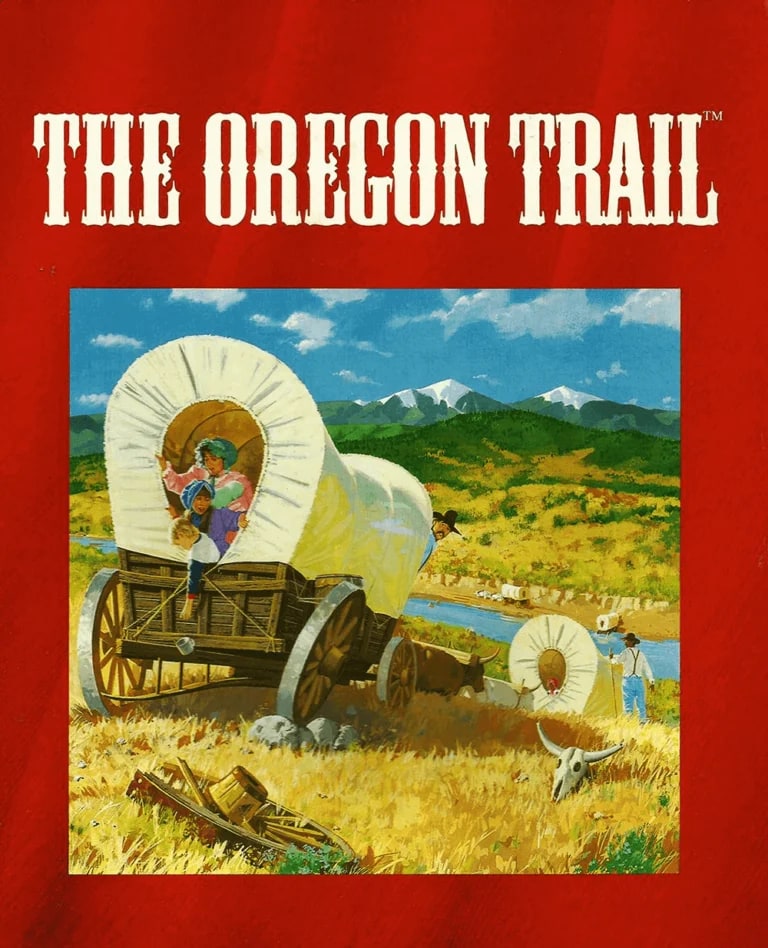
From the first PC version to 1990
In 1988 MECC brought its 1985 Apple II game to IBM PCs and compatible computers running MS-DOS. MECC's own history of the game lists the MS-DOS version that year, and it asked very little of a computer: MS-DOS 2.0 or later, 256K of memory, one floppy disk drive and a CGA graphics card. The oldest copy known today is version 1.1, from 1989.
It is the same trip players knew from the Apple II. You pick from numbered menus, the game waits for you to press the space bar between screens, and the little ox pulls your wagon across the travel screen toward the next landmark.
How it plays
You can be a banker from Boston, a carpenter from Ohio or a farmer from Illinois. The banker has the most money and the farmer the least. The game explains that Oregon needed more farmers and carpenters than bankers, so carpenters earn double points when they arrive and farmers earn triple.
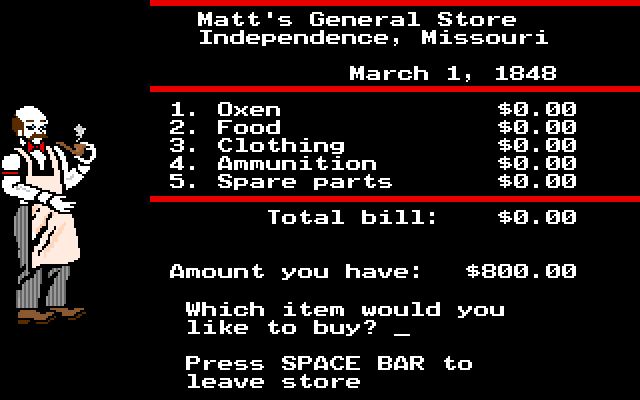
Next you name the four people traveling with you, choose the month to leave and shop at Matt's General Store for oxen, food, clothing, bullets and spare wagon parts. The trip is broken into legs, and each one ends at a landmark such as a fort, a river crossing or a famous rock. At a landmark you can look around, talk to the people there, rest, or buy supplies if there is a store.
Rivers are the big gamble. You can ford, caulk the wagon and float it, or take a ferry where one runs, and at the Snake River a Shoshone guide can help you across. Hunting sends you out on foot with your rifle, and however many animals you shoot, you can carry only 100 pounds of meat back to the wagon. For the last stretch you raft down the Columbia River or take the Barlow Road.
Tombstones and the Top Ten
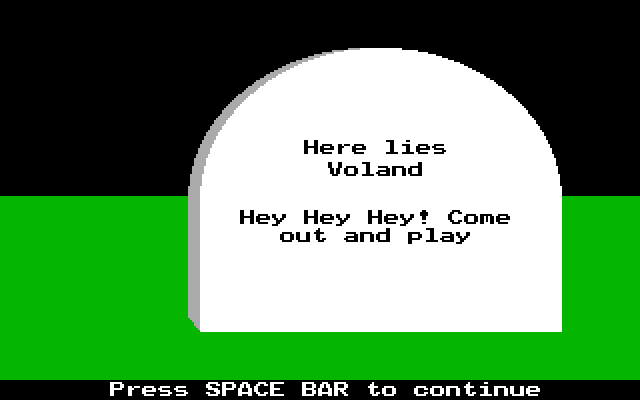
If your trip ends in death, the game shows a tombstone with the leader's name and lets you write an epitaph. The epitaph is saved on the game disk, and the next player who reaches that spot on the trail finds your grave. The game keeps at most one tombstone on each half of the trail.
If you make it to Oregon, your score is checked against The Oregon Top Ten. The list starts out filled with names from the trail's history, with the guide Stephen Meek at the top, and every score gets a rating: greenhorn, adventurer or trail guide.
Updated editions
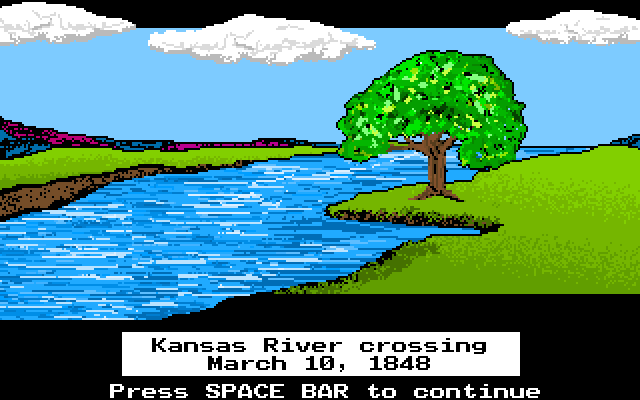
MECC kept improving the MS-DOS version. In 1990 it brought out the updated edition you can play here, with redrawn pictures, which is why you will often see 1990 given as the game's release year. MECC's own history adds an enhanced VGA and MCGA version in 1991. These editions could show the landmarks with far more colors than the first CGA release.
In 1992 MECC followed the keyboard versions with The Oregon Trail Deluxe, which moved the whole game to the mouse. You can play both of them on this site.
Playing it here
The version on this site is the updated 1990 edition. Its opening screen says Copyright 1990, MECC, and it draws the landmarks in VGA color. It runs right in your web browser, it is free, and you do not need an account.
You play it from the keyboard, the way it was made. Type the number of your choice and press Enter, and press the space bar when the game asks you to go on. The Oregon Top Ten starts out the way it came from MECC, with Stephen Meek at the top.
Notable systems
- Keyboard menus: type a number to choose, press the space bar to go on
- Be a banker from Boston, a carpenter from Ohio or a farmer from Illinois
- Double points for carpenters and triple points for farmers
- River crossings, with a Shoshone guide to help at the Snake River
- Hunting on foot, with a limit of 100 pounds of meat per trip
- Tombstones with epitaphs, saved on the game disk for the next player
- The Oregon Top Ten high-score list, rated from greenhorn to trail guide
- CGA graphics in 1988, with MCGA and VGA pictures in later editions
More from the game
24 frames from The Oregon Trail, at the resolution it originally ran at. Pick one to see it at full size.